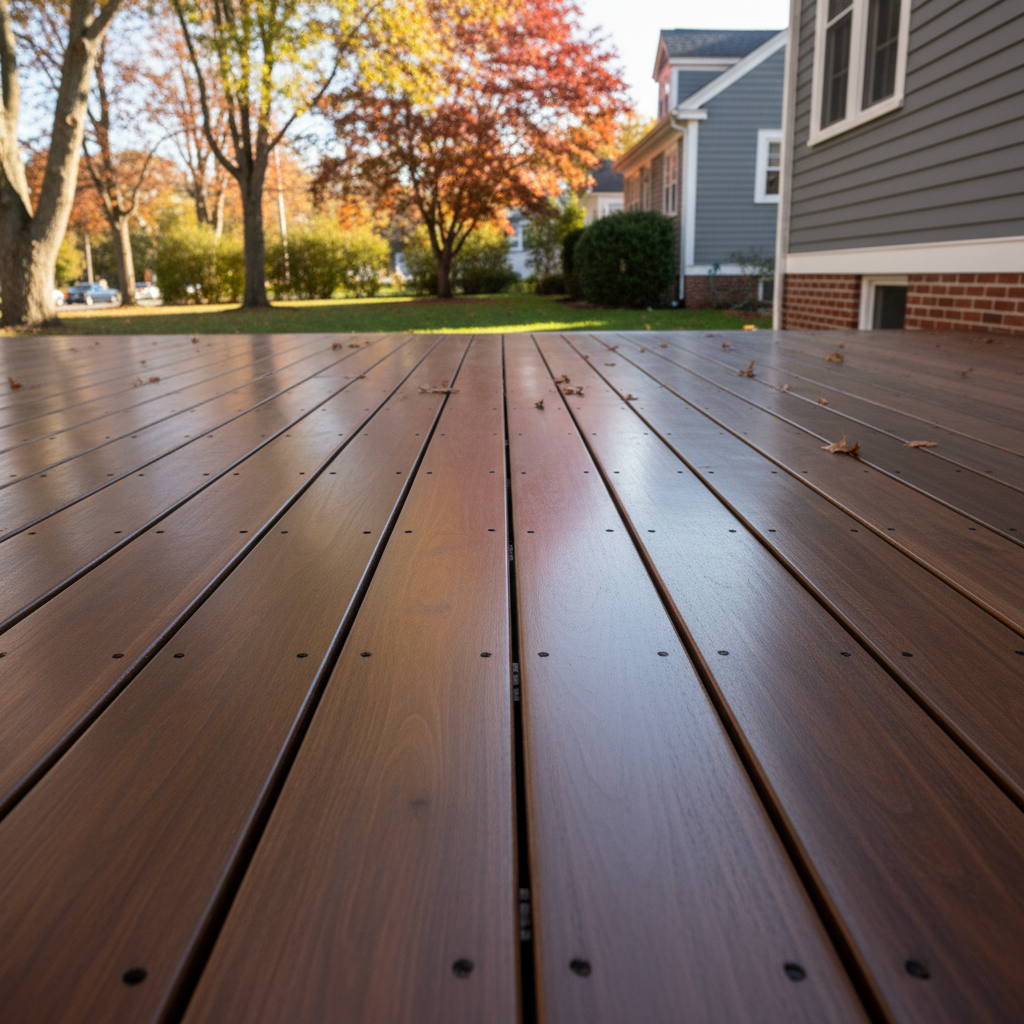
Building or keeping up a wooden deck around Cambridge requires answers to many questions. Between tight urban lots, historic neighborhood rules, and brutal New England winters, standard advice does not always apply. Cambridge Deck Solutions provides straight answers to homeowners who want reliable information about their outdoor wood.
How long does a real wood deck actually last in Cambridge?
Standard pressure-treated southern yellow pine lasts roughly 15 to 20 years if you keep up with the maintenance. Upgrade to cedar, and you can push past 25 years. If you invest in a dense tropical hardwood like Ipe, it can easily clear 40 or 50 years. Wood life here depends entirely on moisture management. Spring thaws and heavy winter snowpacks will rot out poorly flashed ledger boards or trapped framing lumber much faster than the sun ever will.
Do I really need a permit for a backyard deck replacement?
Yes, absolutely. The Cambridge Inspectional Services Department requires a building permit for any deck attached to a house or sitting higher than 30 inches off the ground. Because lots in neighborhoods like Cambridgeport or Mid-Cambridge are squeezed close together, the city wants to make sure your structure does not violate setback rules or lot coverage limits. Trying to skip the permit often catches up to you when you go to sell your home and the buyer inspector asks for documentation.
How often do I need to stain or seal a wood deck here?
Plan on cleaning and re-staining your wood deck every two to three years. If you have a heavily shaded backyard packed with mature maples or oaks that drop wet leaves all autumn, you might need to clean it annually to keep mold and rot at bay. Skipping this cycle lets UV rays dry out the grain and moisture penetrate the wood, leading to deep checking and ugly splintering.
What is the best wood choice for a tight urban yard?
For most homeowners balancing budget and longevity, pressure-treated framing paired with premium cedar decking is the right choice. Cedar resists natural decay nicely and takes solid-body or semi-transparent stains without argument. If you dislike maintenance entirely, you are probably looking at composite instead of wood, but if you want that genuine organic feel under bare feet during a July heatwave, cedar or mahogany are hard to beat.
Why does my deck feel spongy near the house door?
That spongy feeling is almost always water intrusion behind the ledger board where the deck meets your home rim joist. In many older Cambridge houses, builders did not install proper metal flashing or waterproof membranes decades ago. Water gets trapped between the wood framing and your siding, rotting out the structural bolts. When you notice soft spots near the threshold, stop using the deck and get a professional to look at the ledger framing immediately.
Can you build a deck over an existing concrete patio?
Cambridge Deck Solutions builds decks over existing concrete patios all the time for urban yards where digging deep frost footings is difficult due to underground utility lines or old brick foundations. However, you still have to anchor things properly so the structure does not shift during a freeze-thaw cycle. The concrete slab acts as a solid base, but you need proper sleepers, ventilation gaps, and drainage so trapped water does not turn the underside of your deck into a stagnant swamp.